Description
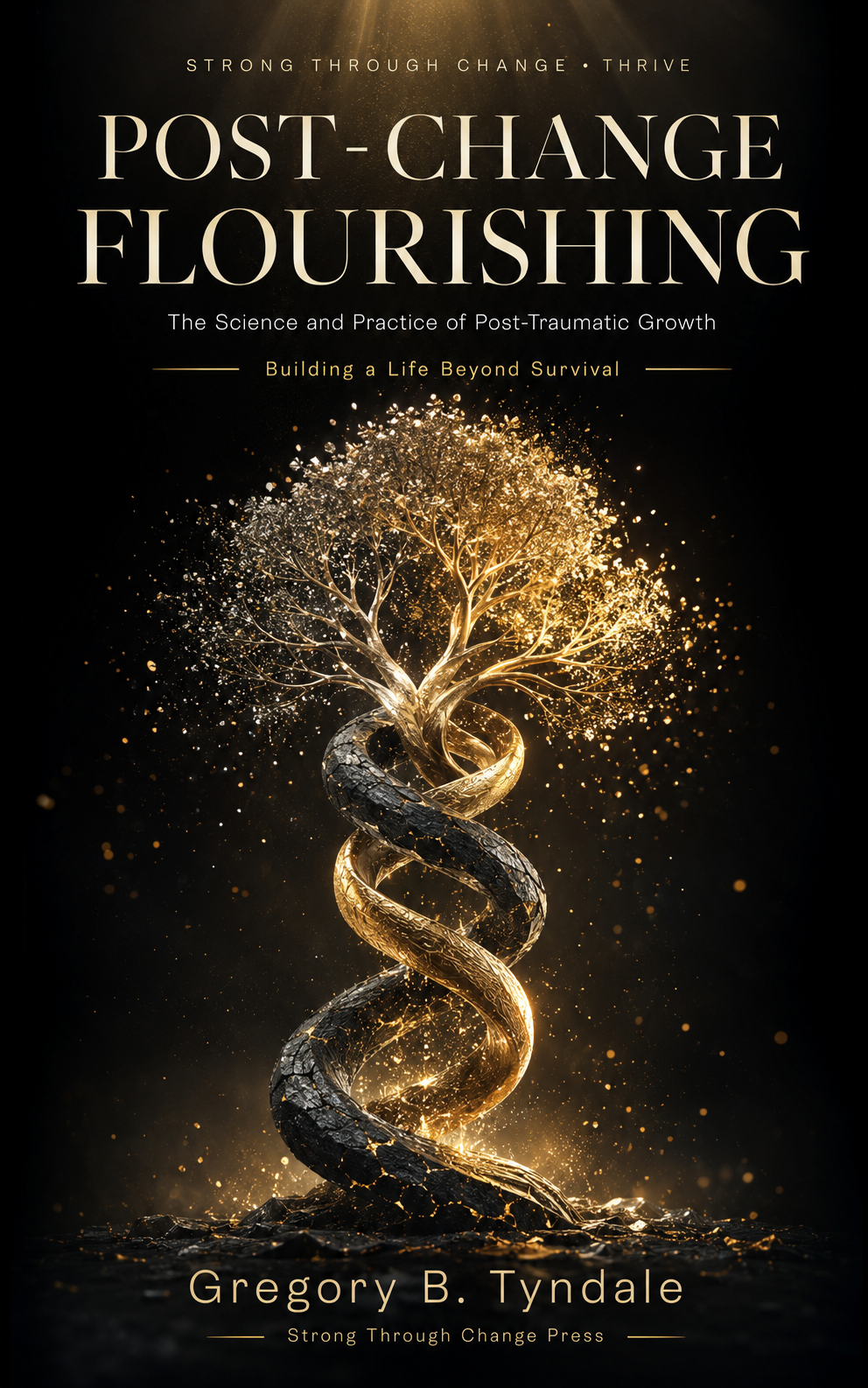
The phrase “what doesn’t kill you makes you stronger” is, in its simplest form, a myth. Adversity does not automatically produce growth. But under certain conditions — with certain kinds of support, engagement, and processing — it can. The scientific evidence for post-traumatic growth (PTG), first systematically documented by Richard Tedeschi and Lawrence Calhoun in the 1990s, is now extensive and robust. And the conditions that make it more or less likely are increasingly well understood. Post-Change Flourishing is a practical guide to creating those conditions.
The book begins with a thorough exploration of what post-traumatic growth actually is and is not — because popular misconceptions about PTG can be as harmful as ignorance of it. PTG is not the absence of pain, not “everything happens for a reason,” and not a product of positive thinking. It is a specific set of changes — in personal strength, in relationships, in appreciation for life, in spiritual and philosophical depth, in perception of new possibilities — that can occur as a result of the cognitive-emotional work of grappling with major adversity.
The practical heart of the book is a structured programme for cultivating the conditions that make PTG more likely: deliberate meaning-making, relationship deepening, narrative sharing (the specific benefits of telling your story in safe contexts), engagement with existential questions, and the development of what Tedeschi calls “the new wisdom” — the perspective shifts that change reliably produces in those who engage it honestly.
The book closes with an honest exploration of the “growth paradox” — genuine PTG does not erase the pain of what happened. It is something that coexists with the pain: a parallel strand of development that slowly becomes stronger than the wound. This paradox is, ultimately, the most profound thing about the experience of change navigated well.




Reviews
There are no reviews yet.