A guide for when life gets hard
Faith & Spiritual Rest
Returning to stillness, meaning, and renewal through faith and contemplative practice.
You're not alone in this.
In a world of relentless acceleration, the ancient wisdom of faith traditions offers something quietly radical: permission to stop. The Christian contemplative tradition — from the Desert Fathers to Thomas Merton to present-day practitioners — has long understood that true rest is not the absence of activity but the presence of God. Sabbath, silence, solitude, and prayer are not luxuries; they are the foundations of a life that can sustain itself over time.
The books gathered in this hub span devotional reading, contemplative practice, and the theology of rest — drawing on Christian thought while remaining accessible to anyone on a spiritual journey. Whether you are returning to faith after a long absence, deepening an existing practice, or simply searching for something that addresses the ache beneath the busyness, these pages were written for you.
Your recovery pathway
Five science-backed stages from crisis to thriving
-
01Stabilize Restore safety and calm
-
02Regulate Manage emotions and energyThis journey
-
03Rebuild Strengthen your foundationsThis journey
-
04Adapt Embrace the new normal
-
05Thrive Create a life you loveThis journey
Books hand-picked for this journey
Every title below has been chosen because it speaks directly to where you are right now — and where you are going.



The Hidden Grief of Retirement
Retirement can feel like a loss, even when you chose it. A science-based guide to grieving…

Designing Meaningful Success: The Complete Guide to Excavating Your Values, Designing a Life That Lasts, and Sustaining It for Good
You stopped the bleeding — so what do you actually build? Designing Meaningful Success pic…
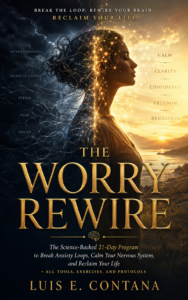
The Worry Rewire Workbook: The Complete 21-Day Practice System
Understanding anxiety is not the same as changing it. Book One gave you the neuroscience. …
Personalised guidance
Discover your personal
resilience profile
The free 5-minute Strong Through Change Assessment reveals exactly which stage of the framework you're in right now — and gives you a tailored reading path to help you move forward.
Insights to guide your journey
The Gift of Spiritual Rest: What the Christian Tradition Knows About Stopping
In an age of relentless productivity, the ancient practice of spiritual rest is not a luxury — it is the foundation of a life that can sustain itself. Here is w…

Questions people ask when facing this challenge
You're not the first to feel this way — and you won't be the last. Here are honest answers to the questions we hear most.
Get personalised guidance →-
Spiritual rest is the experience of ceasing to strive — of releasing the need to justify your existence through productivity, performance, or achievement. It is distinct from physical rest and from mere relaxation. The Christian tradition grounds it in the character of God: a creator who rested, a saviour who withdrew to quiet places, and a Spirit who is described as peace. Without this dimension of rest, the other kinds are never quite enough.
-
Many readers find that the spiritual rest tradition speaks to them precisely in seasons of doubt or distance. The books in this hub do not require you to arrive with settled belief. Several of them — including those by writers like Barbara Brown Taylor, Henri Nouwen, and Thomas Merton — were written from within their own seasons of questioning. Uncertainty is a legitimate place to begin.
-
Sabbath, in the Hebrew and Christian traditions, is not primarily about recuperation — it is about reorientation. A day off restores capacity so you can return to the same rhythm. Sabbath interrupts the rhythm entirely and insists that your worth is not tied to your output. This weekly interruption, practised consistently, gradually reshapes how you understand yourself and your relationship to time.
-
Spiritual dryness — what John of the Cross called "the dark night of the soul" — is one of the most widely documented experiences in the contemplative tradition. It is not a sign of spiritual failure but often a sign of spiritual growth. The books in this hub include several written specifically for this season. Starting with short, daily readings rather than sustained theological study is often the right approach when the well feels empty.